
Tuna protein salad provides a nutrient-dense approach to the classic lunchtime staple. By swapping traditional heavy fats for Greek yogurt and adding crisp, fiber-rich vegetables, this dish transforms a humble pantry ingredient into a balanced, high-protein meal. Ideal for busy professionals, fitness enthusiasts, or families needing a quick nutritious option, this recipe focuses on clean flavors and high-quality protein sources. Whether you enjoy it atop a bed of fresh greens or scooped into lettuce cups, this salad delivers satisfying texture and bright, herbaceous notes that elevate your daily menu.
At a Glance
| Category | Details |
|---|---|
| Prep Time | 10 minutes |
| Cook Time | 0 minutes |
| Total Time | 10 minutes |
| Servings | 2 servings |
| Skill Level | Easy |
| Cuisine | Modern American |
| Course | Main or Lunch |
What Makes This Recipe Stand Out
This version stands out because it prioritizes a creamy mouthfeel without the reliance on traditional high-fat dressings. Using strained Greek yogurt adds a subtle tang that complements the natural brininess of the tuna while significantly boosting the protein content per serving.
We emphasize texture by focusing on a fine dice for the aromatics. Small, uniform pieces of celery and onion create a consistent bite throughout the salad, ensuring that each forkful contains the right balance of crunch and creaminess. The brightness of fresh lemon juice cuts through the richness, providing a clean, vibrant finish that lingers on the palate.
The cooking technique here is purely artisanal assembly. By properly draining the tuna and ensuring the yogurt is smooth before folding in the solids, you achieve an emulsion that binds the ingredients perfectly. This approach proves that sophisticated flavors require only a few fresh, high-quality components.
Ingredient Guide
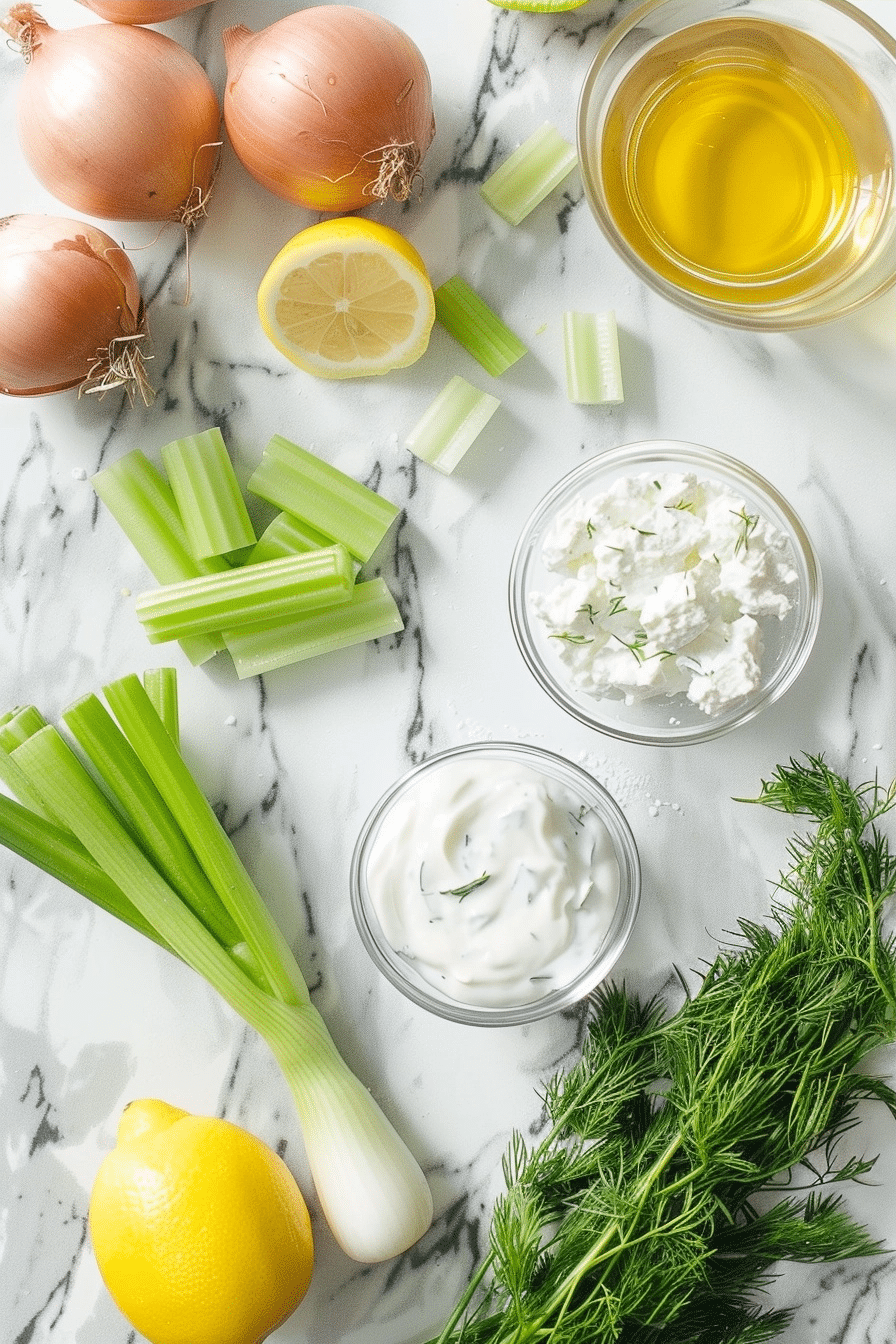
To ensure the best result, source high-quality canned tuna. We recommend skipjack or albacore packed in water for the cleanest flavor profile and lowest fat content.
- Canned Tuna: Provides the primary protein. Use water-packed to control your fats.
- Greek Yogurt: Acts as the binder. Ensure it is plain and unflavored.
- Celery: Adds essential crunch and hydration.
- Onion: Use red or sweet onion for a sharp, fresh zing.
- Dill: Fresh herbs provide an aromatic depth that dried herbs cannot replicate.
- Lemon Juice: Essential for balancing the creaminess and highlighting the tuna.
| Ingredient | Amount | Purpose |
|---|---|---|
| Tuna | 2 cans (5oz each) | Protein base |
| Greek Yogurt | 1/3 cup | Creamy binder |
| Celery | 2 stalks | Texture/Crunch |
| Red Onion | 2 tablespoons | Flavor punch |
| Fresh Dill | 1 tablespoon | Herbaceous top note |
| Lemon Juice | 1 tablespoon | Acid for brightness |
Before You Start
Proper preparation ensures consistency. Use a sharp chef’s knife for mincing the celery and onion to ensure they do not become watery. Prepare your mise en place by measuring all ingredients before beginning the mixing process. Ensure the tuna is thoroughly drained in a fine-mesh sieve; excess water in the can is the number one cause of soggy salad. Keep your Greek yogurt chilled until the moment of mixing, as cold ingredients provide a more refreshing experience.
Cooking Instructions
Preparing the Base
- Drain the tuna thoroughly using a fine-mesh strainer. Press firmly with a spatula to remove all liquid.
- Transfer the tuna to a medium mixing bowl and flake it apart lightly with a fork. Avoid over-mashing, as you want some texture remaining.
Mixing and Assembling
- Add the Greek yogurt, finely diced celery, onion, and fresh dill to the bowl.
- Pour in freshly squeezed lemon juice across the mixture.
- Gently fold ingredients together using a silicone spatula until evenly coated. Add salt and pepper to taste, stirring lightly at the end.
Chef’s Secrets
- The Sieve Trick: Always drain tuna for at least five minutes in a sieve to prevent watery salad.
- Onion Mellowing: If raw onion feels too harsh, soak the minced pieces in water for five minutes before drying and adding.
- Herb Freshness: Add the fresh dill at the very last second before serving to keep the leaves vibrant.
- Salt Control: Canned tuna varies in saltiness, so taste before seasoning.
- Temperature Contrast: Serve the tuna salad cold, but consider plating it over room-temperature greens to vary the sensory experience.
- Texture Balance: Adding a teaspoon of capers can introduce a burst of acidity that pairs exceptionally well with the yogurt.
Easy Variations
| Variation | Change | Result |
|---|---|---|
| Spicy | Add red pepper flakes | Adds a subtle heat |
| Lighter | Use cucumber instead of celery | High hydration/water content |
| Meal Prep | Store dressing separate | Prevents wilting if on greens |
| Gluten-Free | Use lettuce cups | Naturally grain-free |
Serving Suggestions
This salad is versatile. Serve it over a bed of baby arugula or baby spinach for a classic lunch. For a more substantial snack, use hearty seed crackers or sliced cucumbers. It works well inside a whole-grain pita bread or wrapped in a large collard green leaf for a low-carb alternative. Consider serving with a side of apple slices or a light garden salad to round out the meal during the work week.
Storage and Meal Prep
| Storage Method | Shelf Life |
|---|---|
| Airtight Container | 2-3 Days |
| Lettuce Leaf Wrapping | Best served same day |
To maximize fresh, keep the salad in an airtight glass container to prevent flavor transfer with other fridge items. Do not freeze, as the yogurt texture will break down and behave poorly upon thawing.
Nutrition Snapshot
Per serving: 180 calories, 32g protein, 2g fat, 5g carbohydrates. Note: Nutritional values are estimated and based on standard ingredients; actual values may vary depending on brands used.
Frequently Asked Questions
Can I keep this salad for later?
Yes, you can store this in an airtight container for up to three days. However, because of the yogurt base, it is best eaten within 48 hours for optimal flavor and texture. If you notice any liquid pooling at the bottom, simply give it a quick stir to redistribute the moisture before you serve.
How do I avoid watery tuna?
The secret is rigorous draining. Use a fine-mesh sieve and press the tuna firmly against the mesh to squeeze out all excess packing water. If you skip this, the residual liquid will dilute the yogurt, leading to a thin, unpleasant consistency. Patience during the draining phase is mandatory.
Can I swap the Greek yogurt?
You can use a high-quality vegan mayonnaise if you prefer a traditional taste, though it will change the macronutrient profile significantly. If you are looking for a dairy-free swap that keeps the protein high, consider mashed silken tofu or a plant-based plain yogurt alternative that has a thick, Greek-style consistency.
What is the best way to chop the onions?
For a salad, you want a fine brine-like dice. Start by cutting the onion into thin, vertical ribbons, then cut across them into tiny cubes. This creates smaller pieces that distribute evenly throughout the salad, so you get a bit of onion in every forkful rather than large, pungent chunks.
Is this recipe gluten-free?
Yes, as written, the recipe is naturally gluten-free. Just be careful with cross-contamination if you are sensitive, and always check the label of your canned tuna to ensure it was not processed in a facility with gluten-containing grains. Served on its own or in lettuce cups, it remains a safe and healthy option.
Can I add more crunch?
Beyond the celery, you can add diced bell peppers or toasted sunflower seeds. These additions provide a lovely textural contrast to the soft tuna. If you enjoy a slight heat, finely chopped radishes serve as a fantastic, crunchy, and peppery addition that works beautifully with the creamy yogurt dressing.
Final Thoughts
Creating a balanced meal does not require hours in the kitchen. This tuna protein salad delivers everything you need for a satisfying lunch: lean protein, crisp vegetables, and a creamy, flavorful dressing. It is a testament to how simple, wholesome ingredients can come together to keep you fueled and energized throughout your busy day. We encourage you to try this recipe, perhaps experimenting with your favorite herbs or adding a bit of fresh garden vegetables. Embrace the process, keep your ingredients fresh, and enjoy the simplicity of a truly healthy meal prepared right in your own kitchen.
Print
Tuna Protein Salad
- Total Time: 10
- Yield: 2 servings 1x
- Diet: Pescatarian
Description
This nutrient-dense tuna salad offers a refreshing and healthy twist on a classic lunchtime favorite. By replacing heavy, traditional mayonnaise with protein-rich Greek yogurt and incorporating crisp celery and fresh dill, this dish achieves a perfect harmony of texture and flavor. It is an ideal meal for those seeking a high-protein, clean-eating option that is satisfying, quick to assemble, and packed with zesty, herbaceous notes.
Ingredients
2 cans (5 oz each) tuna in water, drained well
1/2 cup plain Greek yogurt
2 stalks celery, finely diced
1/4 cup red onion, finely diced
2 tablespoons fresh dill, chopped
1 tablespoon fresh lemon juice
Sea salt and black pepper to taste
Instructions
Drain the cans of tuna thoroughly to remove excess liquid.
In a medium mixing bowl, whisk the Greek yogurt and lemon juice until smooth.
Add the drained tuna to the yogurt mixture and use a fork to flake it to your desired consistency.
Fold in the finely diced celery, red onion, and chopped fresh dill.
Season with salt and pepper to taste and stir until evenly combined.
Serve immediately chilled or store in an airtight container.
Notes
Ensure all vegetables are diced into very small, uniform pieces to maintain a consistent bite. Serve in crisp lettuce cups or on a bed of fresh greens for a low-carb presentation. Store in the refrigerator for up to 2 days.
- Prep Time: 10
- Category: Lunch
- Method: No-cook Assembly
- Cuisine: Modern American
Nutrition
- Serving Size: 1 serving
- Calories: 210
- Sugar: 3g
- Sodium: 380mg
- Fat: 2g
- Saturated Fat: 0.5g
- Carbohydrates: 8g
- Fiber: 2g
- Protein: 40g
- Cholesterol: 65mg