
One pan lemon salmon brings elegant flavors to your dinner table with minimal cleanup. By roasting fresh salmon fillets alongside crisp asparagus and fragrant garlic, this dish achieves a balanced, nutrient-dense profile in under thirty minutes. It is a reliable solution for busy weeknights when you want a home-cooked meal without spending hours in the kitchen. This preparation technique highlights the natural richness of the fish, complemented by the brightness of citrus, making it a crowd-pleasing choice for families and solo cooks alike who appreciate simplicity and quality.
At a Glance
| Detail | Information |
|---|---|
| Prep time | 10 minutes |
| Cook time | 15 minutes |
| Total time | 25 minutes |
| Servings | 4 |
| Skill level | Easy |
| Cuisine | Modern American |
| Course | Main Dish |
What Makes This Recipe Stand Out
This dish relies on high-heat roasting to create a delicate crust on the salmon while keeping the interior moist and buttery. The direct contact with the hot sheet pan allows the lemon juices and garlic aromatics to infuse every element of the meal simultaneously.
By arranging the asparagus around the salmon, the vegetables roast in the juices rendered from the fish. This creates a cohesive flavor profile that would be impossible to achieve if the components were cooked separately. It is a refined approach to home cooking that prioritizes efficiency.
Ingredient Guide
Selecting the right components ensures the best texture and taste for your sheet pan dinner.
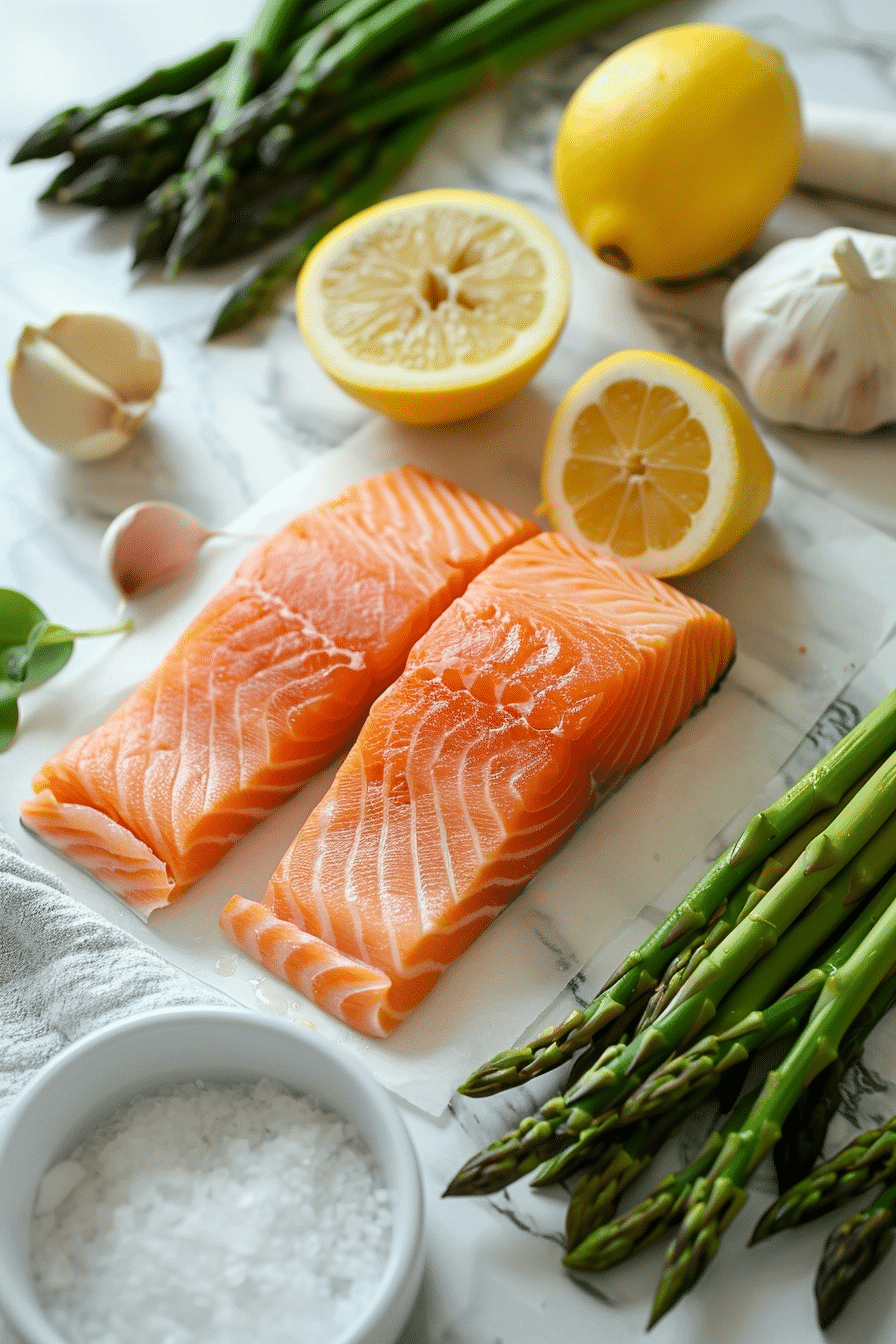
- Salmon Fillets: Opt for thick, center-cut fillets for even cooking. Look for bright color and a fresh, clean scent.
- Asparagus: Choose thin to medium spears, as they cook at the same rate as the fish. Trim the woody ends before placing them on the pan.
- Lemon: Fresh slices provide both a beautiful presentation and a source of acidity that cuts through the fat of the salmon.
- Garlic: Freshly minced garlic provides the savory backbone of the dish. Avoid pre-minced versions in jars to maintain a brighter flavor profile.
| Ingredient | Role | Substitution |
|---|---|---|
| Salmon | Primary Protein | Arctic Char or Trout |
| Asparagus | Primary Vegetable | Green Beans or Broccolini |
| Lemon | Acidity | Meyer Lemon or Lime |
| Garlic | Aromatics | Shallots or Garlic Powder |
Before You Start
Ensure you have a heavy-duty, rimmed baking sheet ready to contain the juices. Line your pan with parchment paper or heavy-duty foil for a seamless transition from oven to sink. Pat the salmon dry with a paper towel before seasoning to ensure it browns effectively rather than steaming in excess moisture.
Cooking Instructions
Preparation Phase
- Preheat your oven to 400 degrees Fahrenheit. Ensure the rack is in the center position for even heat distribution.
- Prepare the salmon by patting it dry. Place the fillets on the center of the baking sheet and arrange trimmed asparagus around them.
Seasoning and Roasting
- Drizzle olive oil over both the salmon and the asparagus. Distribute the minced garlic, sea salt, and black pepper evenly across the entire pan.
- Place thin lemon slices on top of the salmon fillets and tuck a few more among the asparagus.
- Roast in the center of the oven for 12 to 15 minutes. The salmon is finished when it flakes easily with a fork and the asparagus is tender yet still crisp.
Chef’s Secrets
- Avoid overcrowding the pan; allow air to circulate around the food for better caramelization.
- Use room-temperature salmon to ensure it does not drop the oven temperature significantly upon entry.
- Zest the lemon before slicing it to incorporate an extra layer of citrus aroma into the garlic oil mixture.
- If you prefer extra crispy skin, place the salmon skin-side down on the parchment paper.
- Never overcook the salmon; check for doneness at the 12-minute mark to ensure the internal temperature remains near 135 degrees Fahrenheit.
- Let the fish rest for two minutes before serving to allow juices to redistribute.
Easy Variations
| Variation | Change | Result |
|---|---|---|
| Spicy | Add red pepper flakes | Adds a subtle heat |
| Lighter | Replace oil with herb butter | Creates a richer sauce |
| Gluten-Free | Use tamari or herb oil | Remains entirely GF |
Serving Suggestions
Serve this dish alongside fluffy quinoa or roasted baby potatoes to complete the meal. A simple side salad with a vinaigrette dressing provides a refreshing contrast. For beverages, pair this with sparkling water infused with mint or a chilled herbal iced tea.
Storage & Meal Prep
| Method | Instructions |
|---|---|
| Refrigeration | Store in an airtight container for up to 2 days. |
| Freezing | Not recommended for best texture. |
| Reheating | Warm gently in the oven at 300 degrees until just heated through. |
Nutrition Snapshot
Each serving contains approximately 350 calories, 32g of protein, and 18g of healthy fats. Note that nutritional values are estimates based on standard preparation and may vary based on specific brands of ingredients used.
Frequently Asked Questions
Can I reheat salmon in the microwave?
Reheating salmon in the microwave is generally discouraged because it can result in an uneven texture and an overly strong scent. The high heat often causes the protein to dry out rapidly. It is much better to reheat the fillets in a conventional oven set to a low temperature, covering them with foil to retain moisture. If you must use a microwave, use a very low power setting and add a splash of water or lemon juice to create steam, which prevents the fish from becoming rubbery.
Should I remove the skin before cooking?
You do not need to remove the skin before roasting. In fact, keeping the skin on acts as a protective barrier between the flesh and the hot baking sheet, helping to prevent the delicate bottom of the fillet from overcooking. It also helps the fish hold its shape during the transition from the oven to your serving plate. If you do not enjoy eating the skin, it will peel off easily once the salmon is cooked, leaving the moist, tender meat intact.
What is the best way to tell if the fish is done?
The best way to judge doneness is by using a digital probe thermometer. Insert it into the thickest part of the fillet; the fish is ready when it reaches an internal temperature of 135 degrees Fahrenheit. If you do not have a thermometer, gently press the top of the fillet with a fork. If the meat separates easily into opaque flakes, it is ready. If it still looks translucent or resists flaking, return it to the oven for an additional two minutes.
Can I substitute frozen salmon?
Frozen salmon works fine, but you must thaw it completely before roasting. Place the frozen fillets in the refrigerator overnight. Once thawed, pat them extremely dry with paper towels to remove excess ice crystals. If you attempt to roast frozen fish directly, the moisture released during the melting process will cause the salmon to steam rather than roast, resulting in a mushy texture and uneven cooking. Proper preparation of the fish surface is essential for a high-quality result.
How do I prevent the garlic from burning?
To keep the garlic from burning, ensure it is coated thoroughly in olive oil. You can also tuck the garlic pieces slightly underneath the salmon fillets or around the asparagus so they are shielded from direct heat while still flavoring the surrounding area. Since the roasting time for this one-pan dish is relatively short, burning is less likely, but keep an eye on the pan if your oven tends to run hot. If the garlic appears to be browning too quickly, lightly tent the pan with foil for the final few minutes.
What other vegetables work well with this recipe?
While asparagus is the classic choice, many other vegetables can thrive in this environment. Cherry tomatoes, zucchini slices, and bell pepper strips all roast in a similar amount of time. If you prefer sturdier vegetables like broccoli florets, cut them into small, uniform pieces to ensure they cook through before the salmon finishes. Remember that softer vegetables, like tomatoes, will release more liquid, which can create a light sauce. Adjust your vegetable choices based on what you have on hand and enjoy experimenting with different textures.
Final Thoughts
One pan lemon salmon is the ultimate answer to the question of what to cook for a healthy, stress-free dinner. By focusing on fresh ingredients and simple cooking techniques, you create a dish that honors the quality of the fish while keeping your kitchen clean. Whether you are cooking for your family or simply trying to get a nutritious meal on the table after a long workday, this recipe offers reliable, delicious results. Embrace the simplicity of this method and enjoy the vibrant flavors that fresh lemon and garlic bring to your table tonight.
Print
One Pan Lemon Salmon with Roasted Asparagus
- Total Time: 25
- Yield: 4 servings 1x
- Diet: Pescatarian
Description
Elevate your weeknight routine with this elegant, nutrient-dense one-pan meal. By roasting fresh, center-cut salmon fillets alongside tender asparagus, fragrant garlic, and bright lemon slices, you achieve a perfectly balanced dish in under thirty minutes. The natural juices from the fish infuse the vegetables as they roast, creating a cohesive, buttery flavor profile with minimal cleanup. It is a refined, simple solution for busy cooks who value high-quality ingredients and efficient, stress-free meal preparation.
Ingredients
4 center-cut salmon fillets (approx. 6 oz each)
1 bunch fresh asparagus, woody ends trimmed
2 lemons, thinly sliced
4 cloves garlic, minced
2 tablespoons extra virgin olive oil
1 teaspoon sea salt
1/2 teaspoon freshly ground black pepper
Optional: fresh parsley for garnish
Instructions
Preheat your oven to 400°F (200°C) and line a large rimmed baking sheet with parchment paper.
Pat the salmon fillets dry with paper towels and place them in the center of the prepared baking sheet.
Arrange the trimmed asparagus spears in a single layer around the salmon.
Drizzle the olive oil evenly over both the salmon and the asparagus.
Rub the minced garlic over the salmon fillets and season everything with sea salt and black pepper.
Place the lemon slices on top of the salmon fillets and tuck a few around the asparagus.
Roast in the preheated oven for 12-15 minutes, or until the salmon is opaque and flakes easily with a fork and the asparagus is tender-crisp.
Remove from the oven, garnish with fresh parsley if desired, and serve immediately.
Notes
Ensure the salmon fillets are of similar thickness to guarantee even cooking. If your asparagus spears are very thick, you may want to roast them for 3-5 minutes before adding the salmon to the pan. Store leftovers in an airtight container in the refrigerator for up to 2 days.
- Prep Time: 10
- Cook Time: 15
- Category: One Pot Meals
- Method: Roasting
- Cuisine: Modern American
Nutrition
- Serving Size: 1 fillet with 1/4 of the asparagus
- Calories: 350
- Sugar: 2g
- Sodium: 450mg
- Fat: 18g
- Saturated Fat: 3g
- Carbohydrates: 6g
- Fiber: 3g
- Protein: 42g
- Cholesterol: 95mg